What every Oman HR manager should know about EOSB in 2026
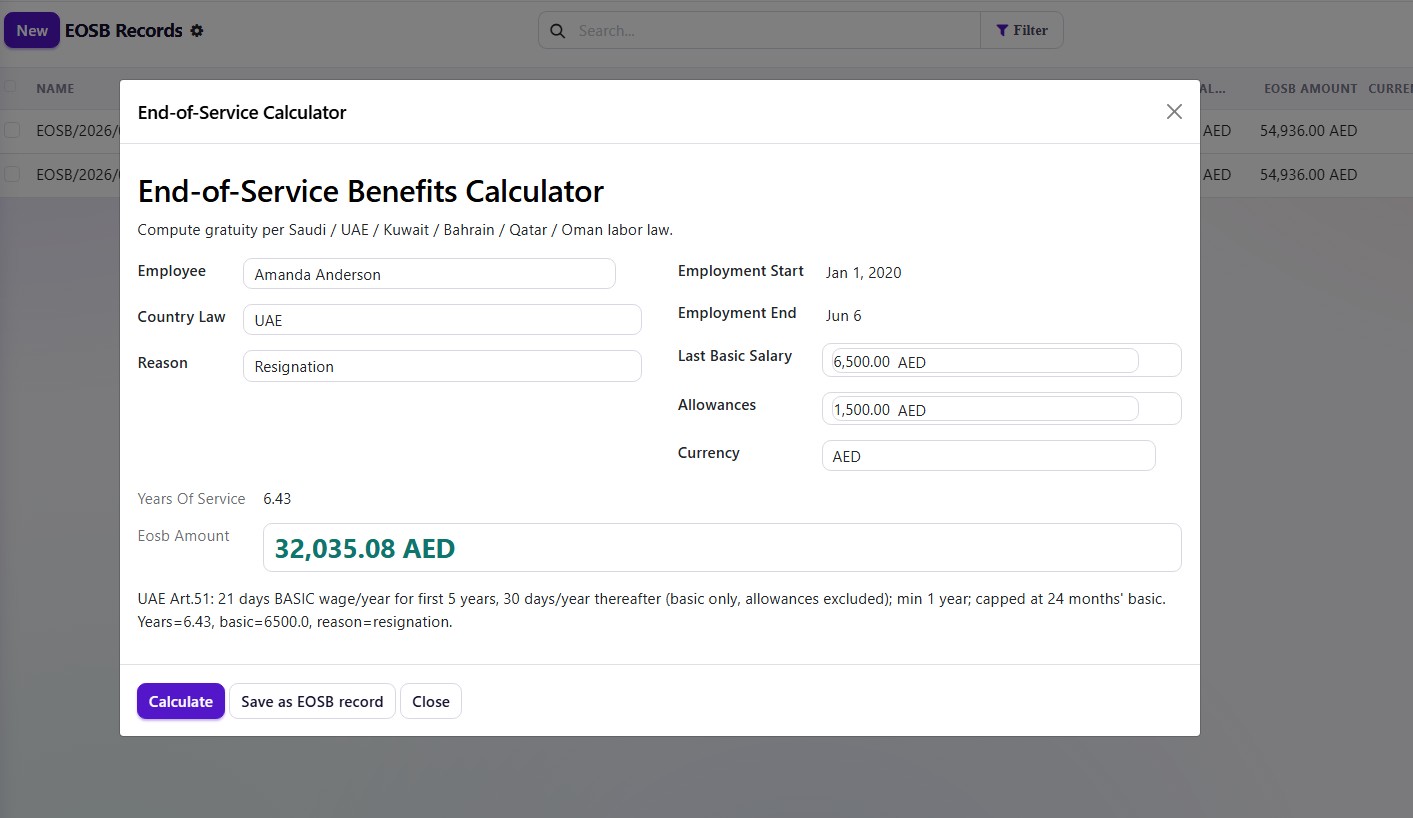
End-of-service benefits (EOSB) are among the most frequently miscalculated figures on Oman payrolls. Here's how to get them right every time — and where teams usually slip up.
What governs EOSB?
Oman private-sector end-of-service benefits are governed by the Oman Labour Law. Since the 2020s reform, most insured employees are covered through mandatory social-insurance contributions, with legacy lump-sum gratuity still applying to service completed before an employee was brought under the scheme. The headline rule is simple in principle, but the details — which service counts as "legacy" and how it's paid out — are what trip teams up.
The core rule
For continuous service completed under the legacy scheme:
- One month of basic wage for each year of continuous service.
- Service after an employee is brought under the social-insurance scheme is covered by contributions instead of a lump sum.
"The rule of thumb: multiply one month's basic wage by the number of years of legacy service completed."
A worked example
Take an employee with a monthly basic wage of OMR 650 who has completed 6.4 years of legacy service, ending on contract completion:
- Total = 6.4 years × OMR 650 ≈ OMR 4,160.
Let the system handle it
In Oman HRM, EOSB is computed automatically from basic wage, years of service and the leaving reason, with a transparent breakdown you can review before approval and payment — and support for Oman plus five other GCC countries.
Try the live calculator to see the same logic that's built into the product.
Compute EOSB with confidence
See how Oman HRM handles EOSB and payroll for your team.